

Shipping Label 101: A Guide for NZ E-Commerce Businesses
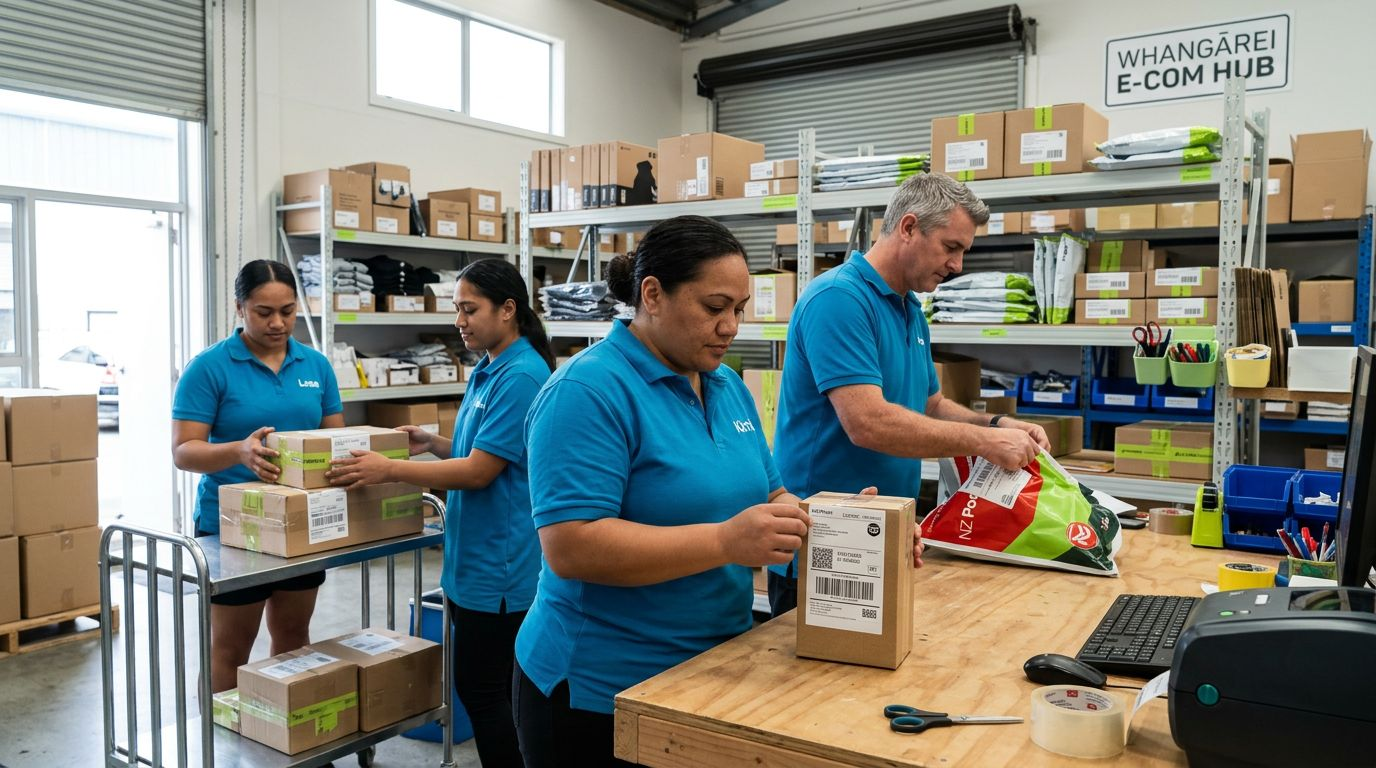
Professional Shipping Label Print and Design for NZ Courier Labels
Key Takeaways
- Standard NZ Post courier labels require a specific size of 174mm x 100mm to ensure automated sorting and delivery.
- Inaccurate label declarations for weight or size can result in a $5.50 administration fee per parcel.
- Professional label materials like gloss white polypropylene offer superior durability compared to standard paper for high-volume shipping.
- Clear addressing and valid barcodes are essential for maintaining brand trust and avoiding lost items.
Shipping labels serve as a critical link between booming online demand and on-time delivery performance for New Zealand e-commerce businesses. When you consider that Kiwi shoppers spent over $6.09 billion online in 2024, the humble sticker on your parcel becomes a major player in your supply chain. This spending represented a 5% increase from 2023, even while overall retail spending fell by 1.7% in the same period. Every parcel you send carries your brand reputation. A smudged barcode or a peeling edge can lead to delays that frustrate customers and strain your support team.
We have seen how even small labelling mistakes translate into lost sales and damaged trust. In our experience, treating the shipping label as a strategic tool rather than an afterthought helps businesses scale efficiently. The momentum in the market remains strong, as Kiwis spent $1.5 billion online in the first quarter of 2025, which was 7% more than the previous year. This growth signals a clear opportunity for retailers who can refine their logistics, starting with the very first thing a courier sees: the label.

Understanding NZ Post Labelling Standards
Compliance with carrier requirements ensures your parcels move through the network without manual intervention. NZ Post has defined clear standards for shipping labels to facilitate accurate processing. Every parcel must have an individually applied label in a recognisable format with a valid barcode. The preferred domestic courier label size is 174mm x 100mm, often referred to in the industry as 7 by 4 inches. Using non-conforming labels leads to delays or the loss of items. NZ Post disclaims liability for items that do not meet these specific standards.
Accuracy in your label data is equally vital. NZ Post uses automated systems to compare the actual or volumetric weight against the declared weight on your label. Volumetric weight is a calculation carriers use to determine the price of a parcel based on its size rather than just its weight on a scale. When these figures do not match, the carrier will invoice you for the difference. They also apply a $5.50 excluding GST administration fee per parcel for under-ticketing. Correctly specified labels help you avoid these unexpected costs and keep your margins healthy.
For more information on the specific layout and barcode requirements, you can view the official shipping label information provided by the carrier. Following these guidelines ensures your parcels are processed within service standards.
Key Information Every Shipping Label Needs
A professional shipping label does more than just show an address. It provides a roadmap for the courier. Following NZ Post’s addressing standards is essential for accurate delivery. Required fields include the Contact Name, Contact Phone, Company Name, and Building Name where applicable. You must also include Address Lines 1 to 3 and specific Delivery Instructions to help the driver find the right spot. Clear, validated street or PO Box formats ensure the parcel reaches its destination without a hitch.
We recommend integrating these fields into your e-commerce platform to automate the creation of your labels. This reduces manual entry errors. You can find the full list of mandatory fields on the addressing standards page. When your labels are clear and compliant, you provide a better experience for both the courier and the end customer.
Choosing the Right Label Materials and Formats
The environment your parcel travels through should dictate your choice of material. A parcel sitting in the back of a van or on a rainy doorstep requires a label that stays put and remains legible. We offer a comprehensive selection of custom shipping and cartage labels printed on gloss white PP or paper. Gloss white polypropylene (PP) is a synthetic material that offers excellent resistance to moisture and tearing. This makes it ideal for items that might face rough handling or outdoor exposure.
Paper labels are a cost-effective solution for standard indoor shipping. Whether you use a thermal printer for rolls or a laser printer for A4 sheets, the adhesive quality is paramount. A permanent adhesive ensures the label does not lift during transit. We provide labels in various formats, including rolls for high-volume dispatch and sheets for smaller operations. If you require a full suite of product, barcode, and shipping labels, we can manage it all under one roof through our custom label printing in NZ services. This consistency helps maintain your brand image across all touchpoints.
Common Mistakes That Cause Shipping Delays
In our experience, the most common issues arise from DIY printing pitfalls. While it might seem easy to print labels in-house, poor adhesion or smudged barcodes can cause significant disruptions. If a barcode cannot be scanned by the automated network, it requires manual handling. This slows down the delivery and increases the risk of the parcel being sidelined. We have seen many businesses struggle with misaligned sizes or labels that peel off because the wrong glue was used for the packaging material.
Using the wrong label size for a specific courier pack is another frequent error. NZ Post standards require the label to match the Courier Pack size. When you are deciding between managing this yourself or outsourcing, it helps to weigh the total cost of ownership, including the time spent fixing errors and the cost of administration fees. You can read more about the trade-offs in our guide on DIY vs. professional label printing to see which path fits your current volume.
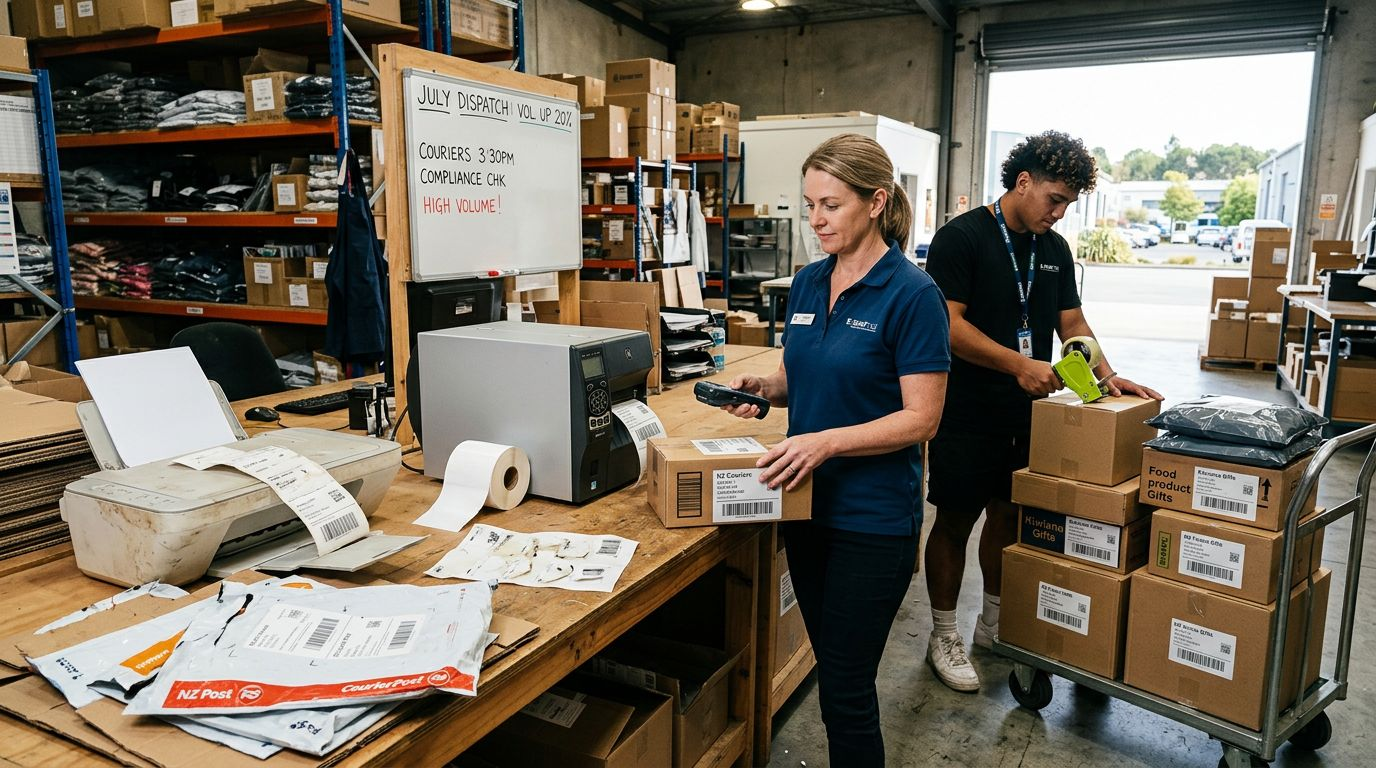
Scaling Your NZ E-commerce Logistics
The New Zealand e-commerce landscape is diverse. Data shows that over 30,000 stores in NZ have monthly sales under $100, which highlights a massive community of micro and small merchants. As these businesses grow, their labelling needs become more complex. Apparel remains a dominant category, generating a significant portion of online sales, followed by Food and Drink. Each of these categories has different requirements for durability and presentation.
Shipping labels are only one part of a compliant packaging ecosystem. As you refine your shipping process, you may also need to look at your product labels to ensure they meet regulatory requirements for safety and marketing. We have developed a compliance checklist that outlines what NZ businesses must know about product labelling. This resource is a great next step for merchants looking to professionalise their entire operation.
We are here to support Kiwi businesses from Whangårei to Bluff. Whether you need a standard roll of courier labels or a custom solution for a unique carton, our team provides practical advice based on years of experience. Costs can vary depending on your specific requirements and volume, but we always focus on providing a solution that keeps your logistics moving smoothly. When you require a unique label specification, our team provides custom support to ensure you get exactly what you need. Reach out to us for a quote and let us help you streamline your shipping process with labels that work as hard as you do.