
Ultimate Guide to Product Label Printing in New Zealand | T & D Print
The Ultimate Guide to Product Label Printing for New Zealand Businesses
Key Takeaways
- Product labels function as both a legal necessity for compliance and a primary marketing tool for brand recognition.
- Choosing the correct material, such as polypropylene for moisture resistance or paper for dry environments, determines the lifespan of your branding.
- New Zealand food businesses must adhere to strict MPI and FSANZ standards regarding allergens, nutrition panels, and date marking.
- Professional digital printing offers low minimum orders, allowing small businesses to test designs and manage multiple product variants efficiently.
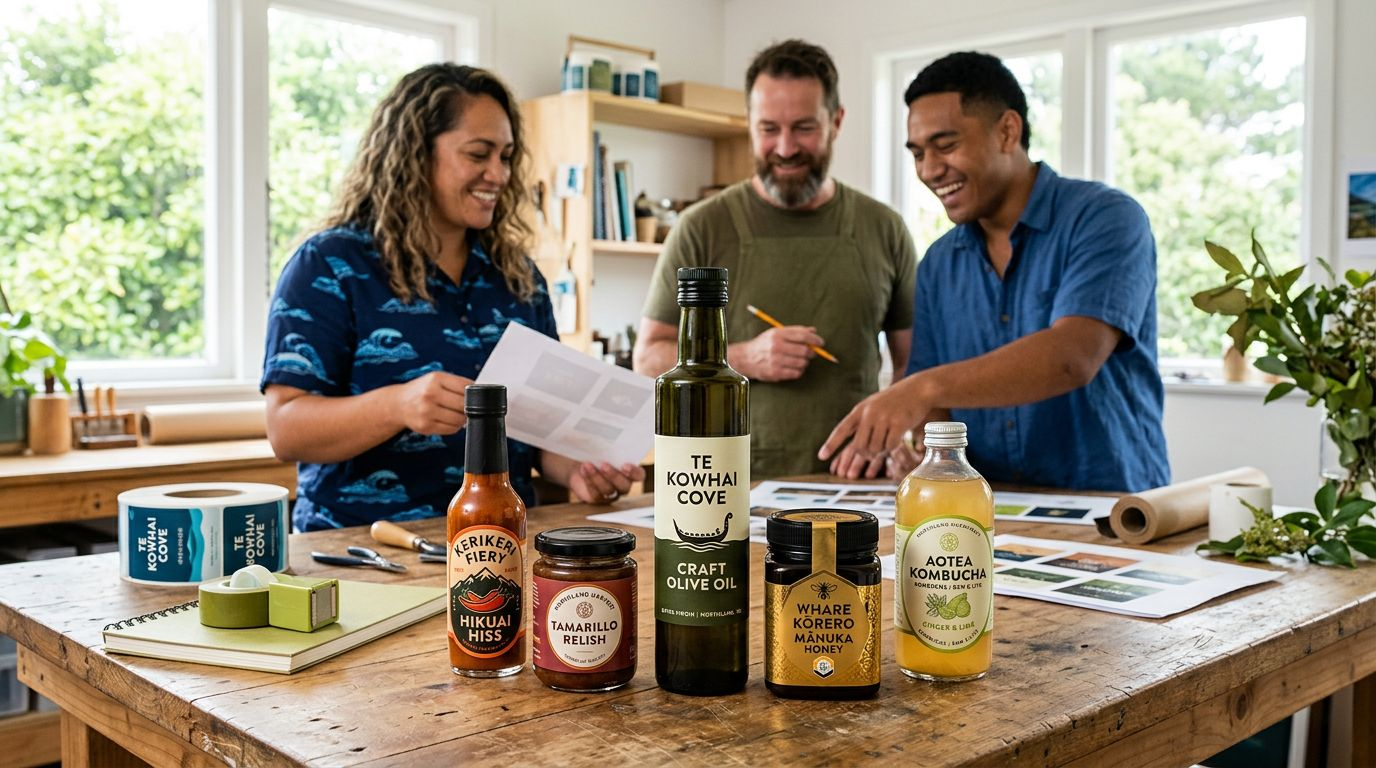
Walking through a local supermarket in Whangārei or a boutique market in Christchurch, you quickly realise that the first thing a customer interacts with is your label. It carries the weight of your brand story, your legal obligations, and your promise of quality. Getting your product label printing right involves balancing aesthetics with technical durability and strict regulatory requirements.
We see many business owners focus solely on the design, only to find their labels peeling in a fridge or failing a health audit. This guide provides a clear path from initial strategy to the final print, ensuring your packaging performs as well as the product inside.
The Strategic Role of Your Product Label
Product labels serve two distinct masters: the law and the consumer. In New Zealand, labels provide essential safety information while acting as a silent salesperson on a crowded shelf. A well-executed label builds trust by providing clear, accessible information while using visual cues to justify your price point.
Primary labels, often called "prime labels," focus on branding and shelf appeal. Secondary labels usually sit on the back or bottom of the packaging, carrying the technical details like ingredients, barcodes, and company addresses. Both must work in harmony to provide a complete customer experience.
For more information on how we can help you achieve this balance, visit our main page for custom label printing.

Planning Your Labelling Strategy
Before you commit to a design, you must define the environment where your product lives. A honey producer in Northland faces different challenges than a craft brewery in Dunedin. Consider the following factors to ensure your labels remain intact and attractive throughout their lifecycle.
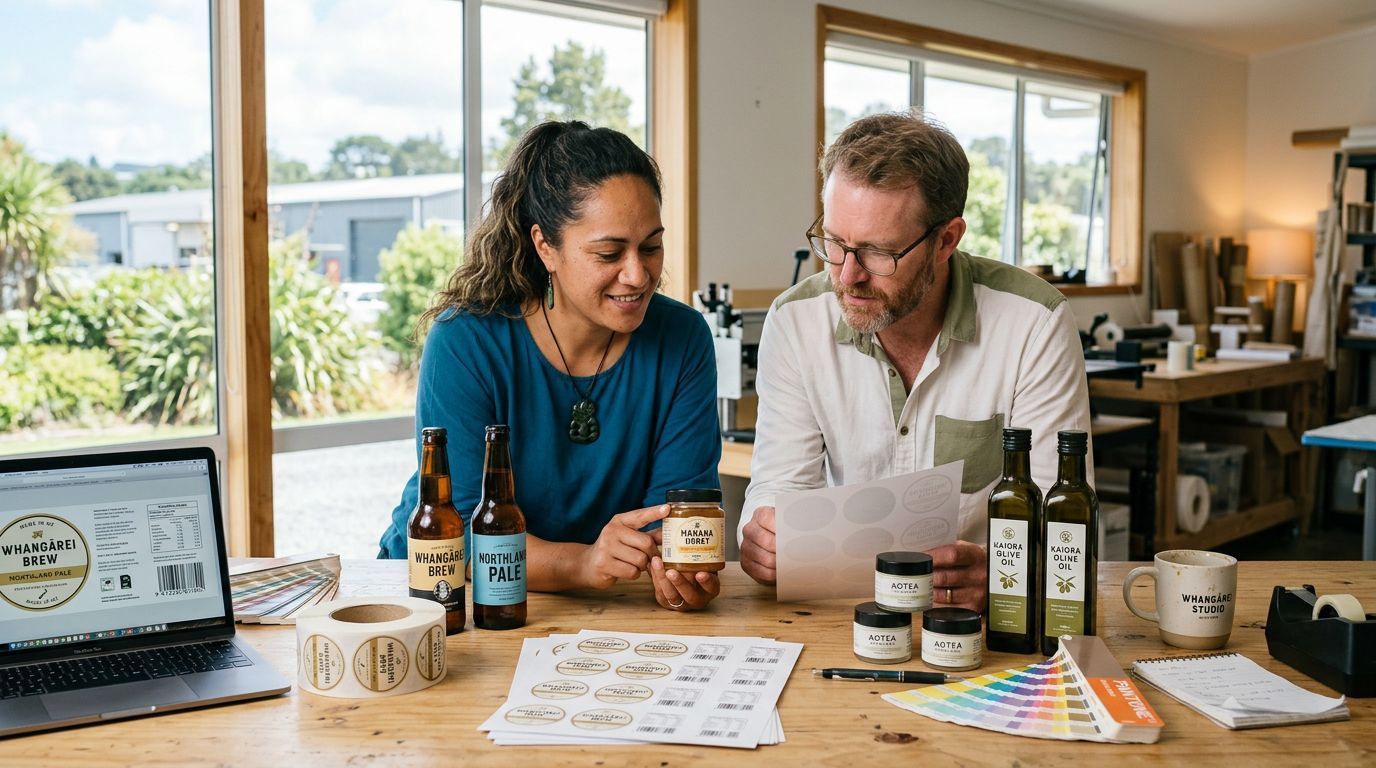
First, identify your target audience and your positioning. A premium organic skincare line requires a different tactile feel, perhaps a matt laminate or foil stamping, compared to a bulk cleaning product. Second, evaluate the physical application. Will you be applying these by hand at a kitchen table, or will they run through a high-speed labelling machine? This decision dictates whether you receive your labels on sheets or rolls.
For businesses scaling their production, we recommend looking into the specific benefits of labels on rolls to ensure compatibility with applicators.
Design Fundamentals for Winning Labels
Effective design prioritises clarity. The most successful labels in the New Zealand market use simplicity to stand out. When a customer looks at a shelf, you have roughly three seconds to communicate what the product is and why they should care. Overcrowding a small label with too much text often leads to the consumer ignoring the product entirely.
Consistency across your product range is equally vital. If you sell three different flavours of jam, the layout, fonts, and logo placement should remain identical, using only colour or imagery to distinguish the variants. This creates a "brand block" on the shelf that is much harder to miss than a collection of unrelated designs.
If you need assistance bringing these concepts to life, our team offers specialized label and packaging design services to ensure your files are print-ready and professional.
Choosing Materials and Ensuring Durability
The durability of your label depends on the "service life" required. A shipping label only needs to last a few days, whereas a label on a bottle of olive oil might need to resist drips and handling for a year or more. Selecting the wrong material leads to bubbling, fading, or total adhesive failure.
- Paper Labels: Best for dry, indoor environments and short-term use.
- Polypropylene (BOPP): The industry standard for food and beverage products due to its water and oil resistance.
- Polyester (PET): Used for industrial applications where extreme temperature resistance or chemical exposure is expected.
- Vinyl (PVC): Highly flexible and durable, making it ideal for outdoor equipment or curved surfaces.
Environmental factors like moisture and sunlight significantly impact adhesion. Standard paper labels can lose up to 30% of their adhesion over six months when exposed to damp conditions. For refrigerated or frozen goods, we always recommend freezer-grade adhesives, which are formulated to bond at temperatures as low as -40°C. You can find more technical details on material performance at Labelic.
New Zealand Compliance and Mandatory Information
Compliance is a non-negotiable aspect of product labelling. The Ministry for Primary Industries (MPI) requires all food sold for retail in New Zealand to comply with the Australia New Zealand Food Standards Code. Failure to meet these standards results in costly recalls and potential fines.
Most pre-packaged foods must display a Nutrition Information Panel (NIP) and a clear list of ingredients. Allergens must be declared in plain English, a requirement that became even stricter in early 2024. Additionally, your label must include a physical business address in New Zealand or Australia. A website or PO Box alone does not satisfy the legal requirement for traceability.
For a deeper look at these regulations, the Food Standards Australia New Zealand (FSANZ) website provides comprehensive tools, including a nutrition panel calculator.
Sustainability in Labelling
Modern consumers increasingly favour brands that demonstrate environmental responsibility. This shift has led to the development of eco-friendly labelling options, including recycled paper stocks and biodegradable films. While these materials often come with specific performance trade-offs, they provide a powerful way to communicate your brand values.
We encourage businesses to consider the entire lifecycle of their packaging. Using a label material that matches the recyclability of the container, such as a clear film on a plastic bottle, can simplify the recycling process for the end user. Small choices in material selection contribute significantly to your brand's overall sustainability narrative.
Partnering with a Professional Printer
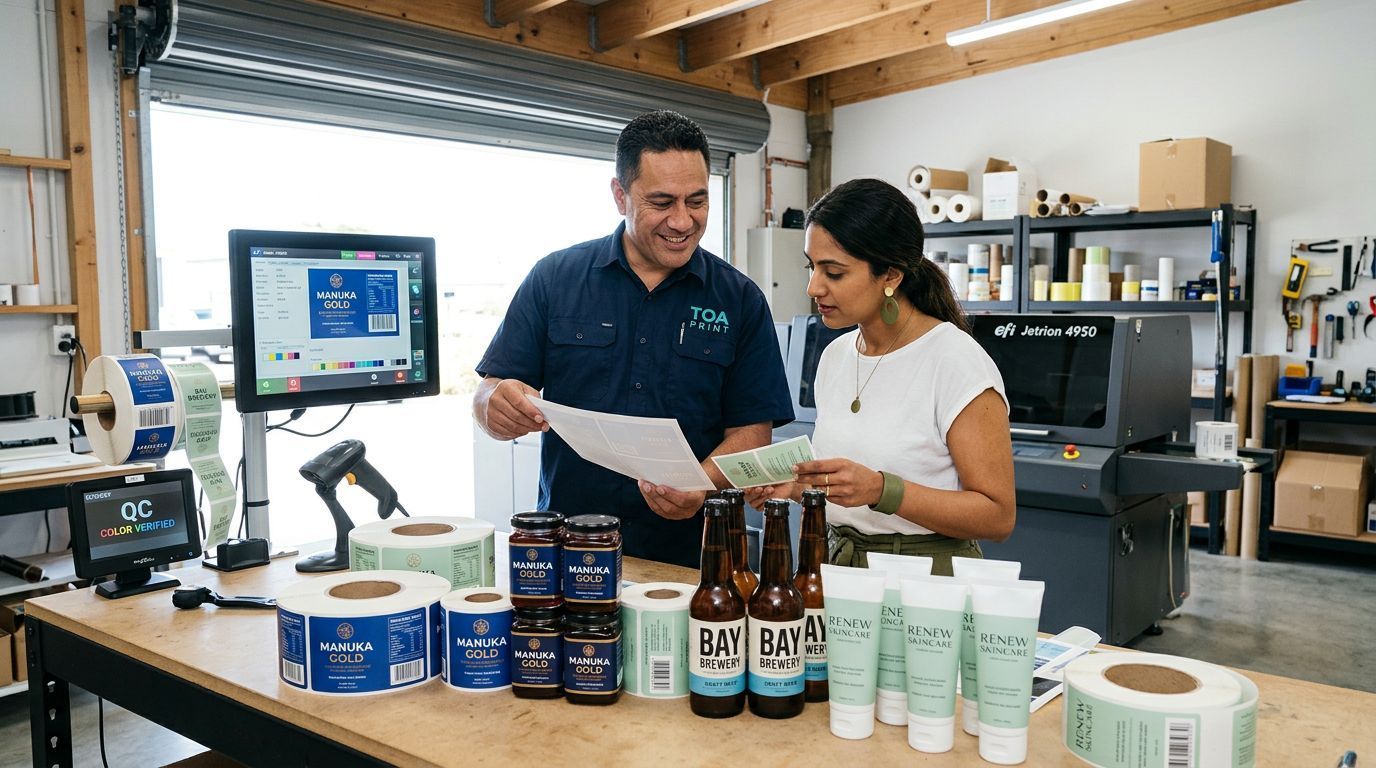
Working with a local New Zealand printer provides advantages that overseas bulk printers cannot match. We understand the local market, the specific MPI requirements, and the logistical challenges of shipping across the North and South Islands. Digital printing technology now allows for low minimum order quantities, which is perfect for small businesses testing new products or seasonal releases.
Professional printers provide the technical oversight necessary to ensure your barcodes scan correctly, your colours remain consistent between batches, and your chosen adhesive actually sticks to your specific container. We take pride in helping Kiwi businesses move from a home-printed sticker to a retail-ready product that competes on the global stage.
Whether you are launching a new startup in Lower Hutt or refreshing an established brand in Auckland, our team is ready to provide the expert guidance you need to succeed.