
Decoding the Cost: What Goes into Printing Custom Labels?
Custom Label Printing for NZ Business: A Guide to Understanding Sticker Costs
Key Takeaways
- Order volume remains the most significant factor in reducing the unit cost of your labels.
- Material choices like paper or vinyl directly impact both the price and the durability of the sticker.
- Digital printing offers a cost-effective solution for small to medium runs without the setup fees of traditional methods.
- Protective finishes and special embellishments add a small per-unit cost while significantly increasing brand appeal.
When you are looking to get your products onto shelves or organise your business assets, the question of cost is always front of mind. We often hear from local business owners who are trying to make sense of a quote and wondering why one option costs significantly more than another. Understanding the variables that go into custom label printing allows you to make informed decisions that balance your budget with the quality your brand deserves.
The global label printing market reflects how much businesses rely on these tools. In 2024, the market was valued at approximately US$51.46 billion, and it is expected to reach US$55.07 billion in 2025. By 2032, experts predict it will grow to US$88.51 billion. This represents a compound annual growth rate (CAGR) of about 7%. A CAGR is simply a way to measure the mean annual growth rate of an investment over a specific period longer than one year. This steady growth shows that labels are a serious, growing investment category for businesses worldwide.
How much does it cost to print 500 stickers?
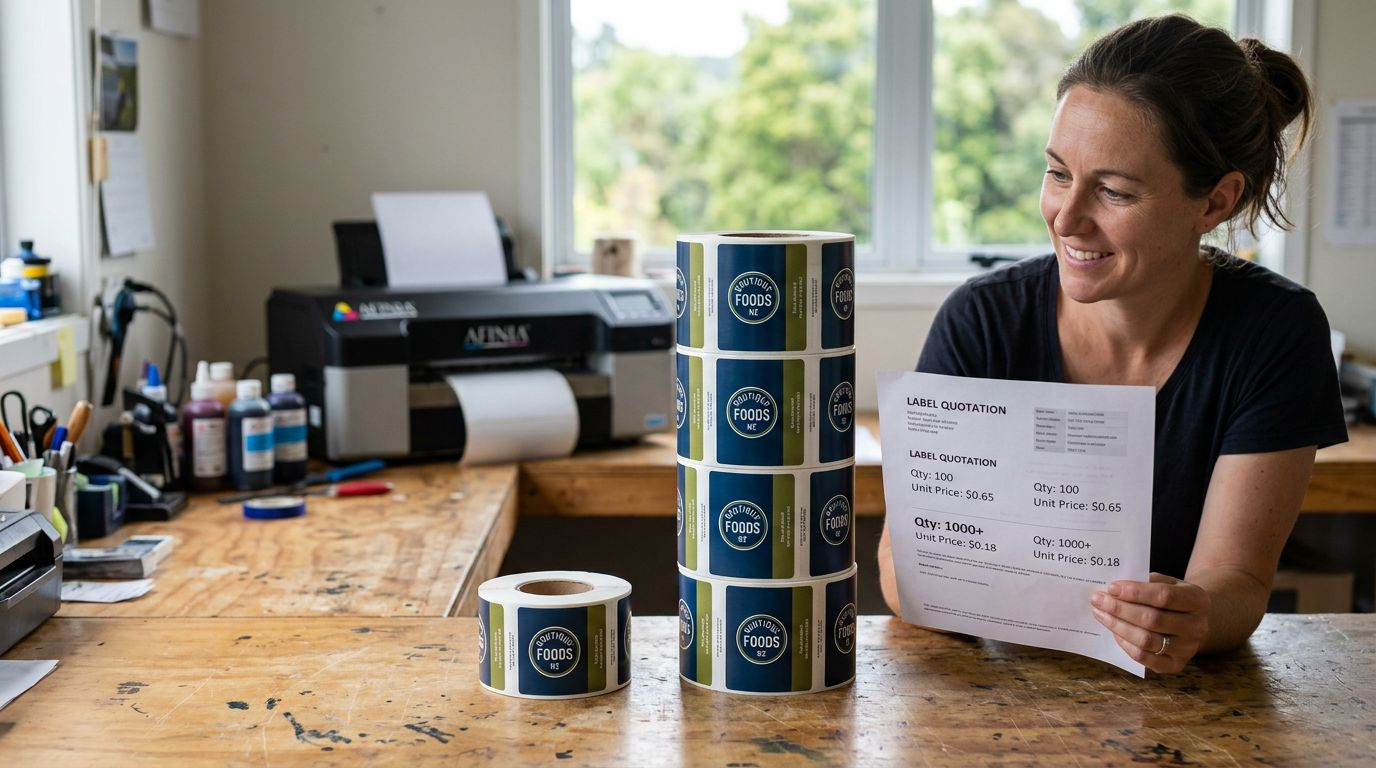
The cost to print 500 stickers typically ranges between US$0.50 and US$2.50 per label depending on the complexity and materials chosen. For many boutique brands in New Zealand, this quantity is a common starting point. According to data from Sttark, most custom labels fall between US$0.10 and US$1.20 per label, with smaller quantities sitting at the higher end of that scale.
In our experience, the unit price drops sharply as you move into higher volumes. While a run of 100 to 500 labels might cost you more per piece, it allows for flexibility if you are testing a new product or running a limited edition. We specialise in supporting these smaller requirements, offering small-run custom label stickers that help startups get off the ground without a massive upfront investment. If you are looking for custom sticker printing in NZ with low minimums, starting with a quantity of 100 is a practical way to manage your cash flow while maintaining a professional look.
Why does order volume affect the price so much?
Order volume affects the price because the initial setup costs of a print run are spread across a larger number of units. This concept, known as economies of scale, means that as you print more, each individual label becomes cheaper to produce. The physical time it takes to set up the machinery, calibrate the colours, and prepare the die-cutting tools is the same whether we print 100 labels or 10,000.
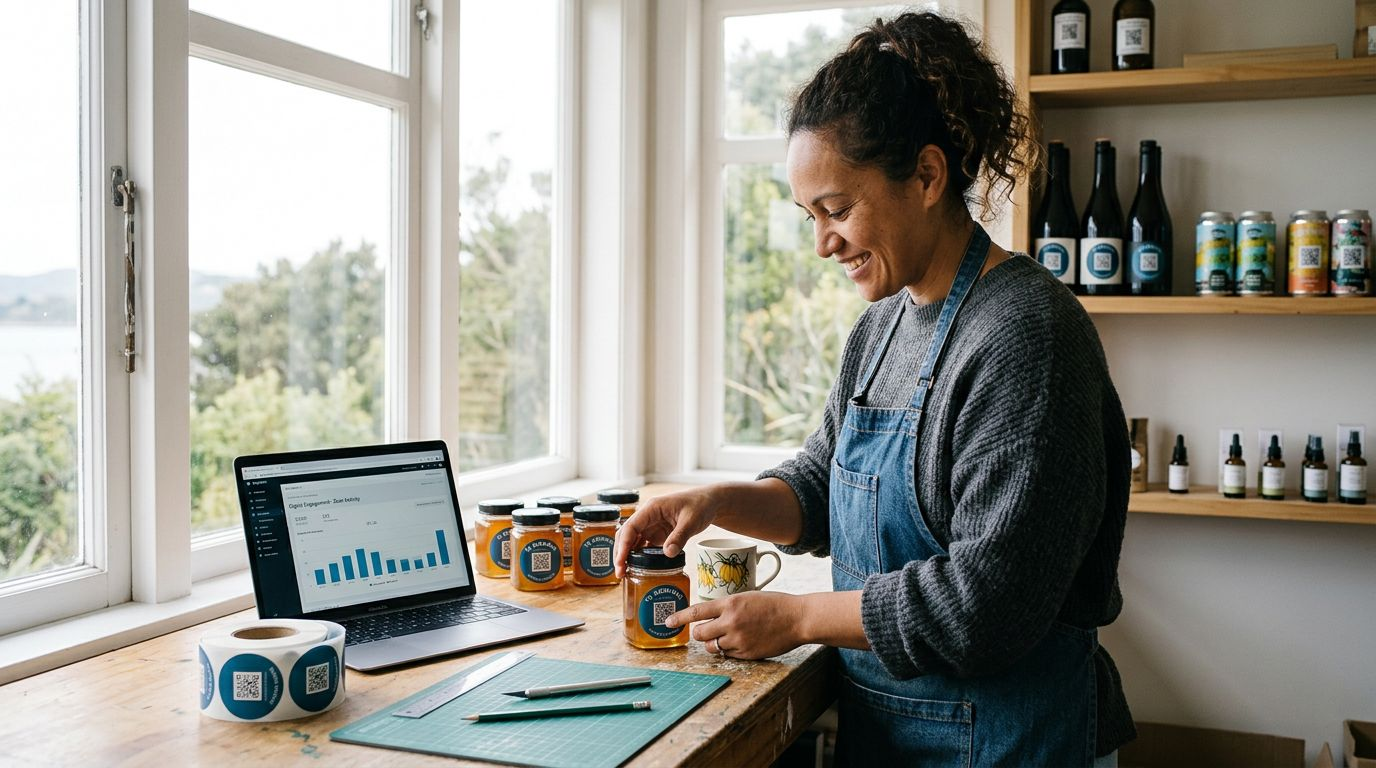
Market data illustrates this clearly. For quantities between 1,000 and 5,000 labels, the price often drops to between US$0.08 and US$0.28 per label. Once you reach 10,000 units or more, the cost can go as low as US$0.06 to US$0.11 per label. We see this happen frequently when a business grows from a home kitchen to a commercial facility. A local honey producer in Northland might start with a few hundred labels, but as they secure national distribution, their per-label cost drops significantly as their order volumes rise.
Does the material choice change the label price?
Material choice is one of the primary drivers of label pricing because different stocks have different raw material costs and production requirements. Paper labels are generally the most economical choice for dry, indoor applications. If your product lives in a fridge, encounters oils, or sits outdoors, you will need more durable materials like vinyl or PET (polyethylene terephthalate), which is a strong, lightweight plastic.
According to Print Pronto, paper materials typically cost between US$0.03 and US$0.10 per label, while vinyl can range from US$0.10 to US$0.30 per label. While vinyl is more expensive, it provides the moisture and oil resistance necessary for products like chilled beverages or cosmetics. We always recommend choosing the right label material for your product based on its environment rather than just the price tag. Using a cheap paper label on a bottle that gets wet will eventually lead to the label peeling or the ink running, which hurts your brand image. You can find more detail on paper vs vinyl vs PET label costs in our dedicated material guide.
How do size and shape influence the final quote?
The size and shape of your label influence the price because they determine how much material is used and how many labels can fit on a single sheet or roll. Larger labels naturally use more substrate and ink, which increases the cost. A standard rectangle is often the most cost-effective because it minimises waste during the cutting process.
Research suggests that size and shape alone can add roughly US$0.05 to US$0.50 per label to your total. Custom shapes, such as a logo-contoured die-cut, require more precise cutting. However, modern digital cutting technology has made these unique shapes much more accessible for small businesses. Whether you need a simple circle for a jar lid or a complex shape for a window decal, the dimensions will be a key part of your specification.
What is the difference between digital and offset printing costs?
Digital printing is generally more cost-effective for short to medium runs, while offset printing offers lower unit costs for very high volumes. Digital printing eliminates the need for physical plates, which reduces setup time and cost. This makes it the go-to choice for businesses that need a variety of different labels in smaller quantities.
The price ranges reflect these technical differences. Digital printing costs often sit between US$0.05 and US$0.15 per label, whereas offset printing can drop to between US$0.02 and US$0.08 per label for massive orders. We use state-of-the-art printing technology to ensure that even our digital runs have the high-quality, vibrant finish you would expect from a traditional press. This flexibility allows us to serve customers across New Zealand who need fast turnarounds and high-quality results without the heavy setup fees of older methods.
Do special finishes and laminations add much to the cost?
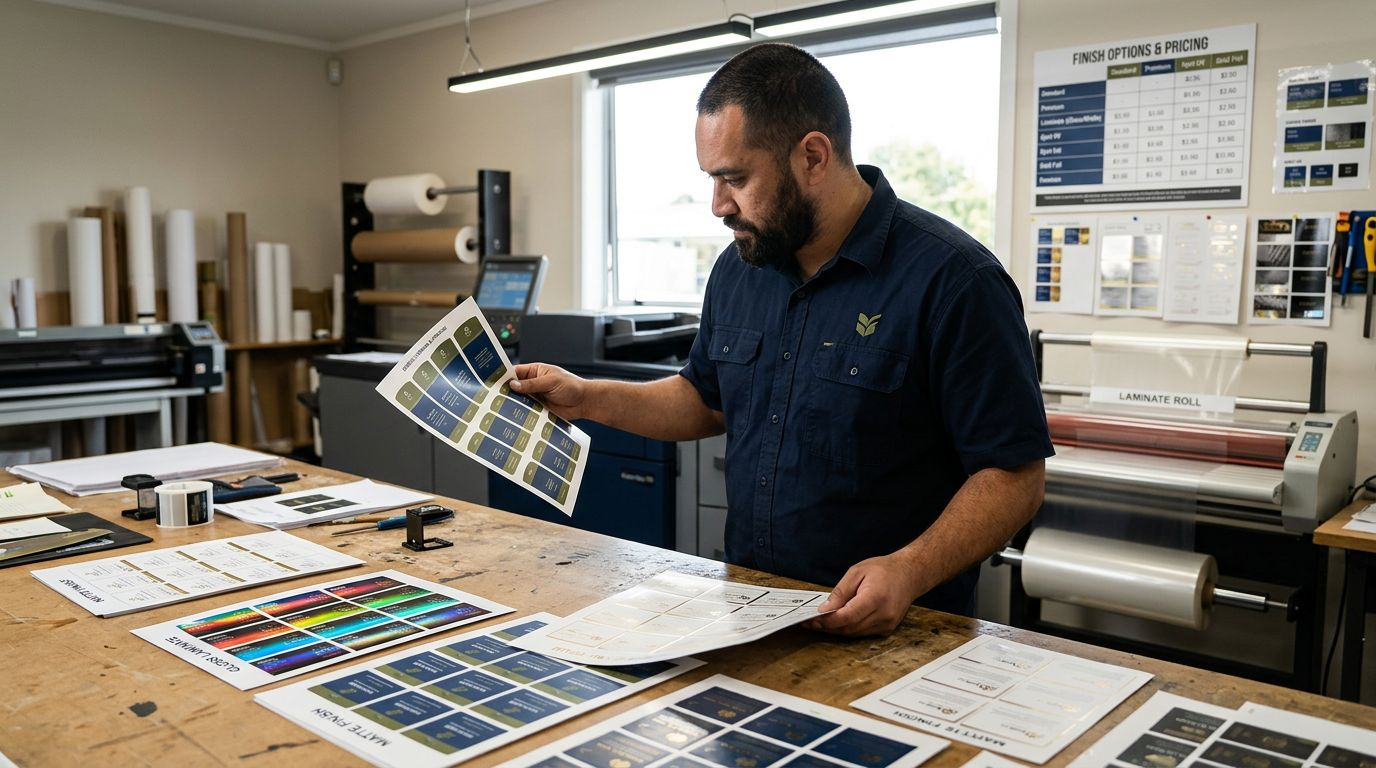
Special finishes like gloss or matte laminations usually add a small incremental cost, often between US$0.01 and US$0.05 per label. While this seems like an extra expense, these finishes provide a protective layer that keeps your labels looking fresh. For example, a UV coating, which protects against sun damage, might add US$0.03 to US$0.10 per label.
A practical example of a complete package would be an order for 1,000 digitally printed 3 inch by 4 inch glossy vinyl labels. This might cost about US$180 in total, or US$0.18 per label. This total includes a US$150 base cost for the labels and materials, plus a US$30 addition for the glossy finish. Premium options like foil, embossing, or spot UV will lift the price further, but they also elevate your brand and help your product stand out on a crowded shelf.
Why is the New Zealand label market growing?
The New Zealand label market is expanding because local businesses are increasingly investing in high-quality packaging to compete both locally and internationally. Data from 6Wresearch shows that New Zealand print label imports grew by 21.5% from 2023 to 2024. This surge indicates a strong demand across sectors like food, beverage, and logistics.
As the market grows, the importance of working with a local partner who understands the NZ environment becomes clear. Whether you are a craft brewer in Christchurch or a boutique skincare maker in Whangārei, you need labels that can handle our unique conditions. We provide custom label printing in NZ that is tailored to these needs. Because we are based here, we can offer fast turnarounds and a consultative approach that overseas automated platforms cannot match. If you are ready to see how these factors apply to your specific project, you can get a custom label quote from our team to find the most cost-effective solution for your brand.